

Ripper casino Plinko game
Introduction
When I review fast-format casino games, I usually look past the surface first. That matters with Ripper casino Plinko, because this is one of those titles that looks almost too simple to deserve serious analysis. A ball drops from the top of the board, bounces through a field of pegs, and lands in a multiplier slot. On paper, that is the whole concept. In practice, Plinko creates a very specific kind of tension that is quite different from what players get from slots, roulette, or crash-style products.
What makes Plinko worth attention is not visual complexity or layered bonus systems. It is the combination of immediate results, visible randomness, adjustable risk, and a session rhythm that can swing from calm to intense in a matter of seconds. I have seen many players underestimate it because the interface looks clean and almost toy-like. That is exactly where misunderstandings begin. Plinko is easy to enter, but not always easy to read correctly.
For an Australian player exploring Plinko at Ripper casino, the key question is not simply whether the game is entertaining. The better question is: what kind of experience does it actually deliver, and what should I realistically expect from it? That is what I will break down here. I will focus on how the game works, why it attracts attention, how risk settings change the feel of a session, and where the real strengths and limits of Plinko show up in actual play.
What Plinko is and why it keeps drawing players in
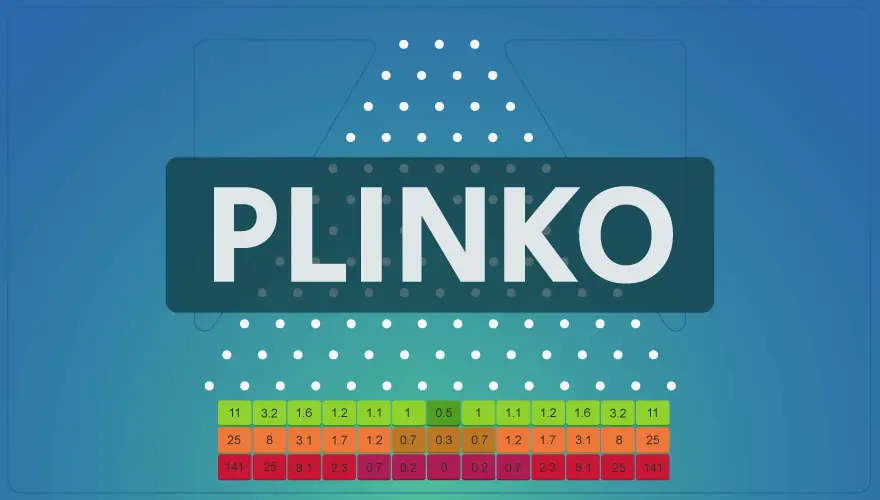
Plinko is a probability-driven casino game built around a vertical board filled with pins. The player chooses a stake, usually selects the number of rows and a risk level, then releases a ball from the top. As the ball hits peg after peg, it changes direction until it finally lands in one of several payout zones at the bottom. Each zone carries a multiplier. Most of the central slots tend to pay lower multipliers, while the edge slots often hold the largest returns.
The appeal is obvious within seconds. There is no need to learn paylines, paytables, symbol values, or bonus triggers. The visual logic is immediate. A player can understand the basic flow of the round almost instantly. That low entry barrier is one reason Plinko became so visible across modern gaming platforms.
But visibility alone does not explain its staying power. The stronger reason is psychological. Plinko gives the player something many digital casino products do not: a visible journey from stake to result. In a slot, the reels spin and stop. In Plinko, the outcome unfolds in front of you. Even though the result is still governed by random number generation, the path of the ball creates suspense in a way that feels tangible.
There is also a subtle design trick at work here. Plinko compresses anticipation into a very short window. You do not wait long, but you still feel every bounce. That makes the game highly watchable. It is one of the few casino formats where the route to the result can be almost as engaging as the result itself.
One observation I keep coming back to is this: Plinko often feels more “fair” to players than it actually is easy to understand mathematically. Because you can see the ball moving, the process looks transparent. But visible motion should not be confused with control. The game shows you randomness; it does not reduce it.
How the Plinko system works in real terms
At the mechanical level, Plinko is straightforward. Before each drop, the player usually sets three main variables:
- Bet size — the amount risked on a single ball drop.
- Rows — the height of the board, which affects the number of bounces before the ball reaches the bottom.
- Risk level — commonly low, medium, or high, which changes the payout distribution across the bottom slots.
Once the ball is released, it moves left or right after each collision point. The exact path is random, but the board is designed so that most outcomes naturally cluster closer to the centre. This is why lower multipliers appear more often, while extreme edge outcomes are rarer and usually carry the headline numbers.
That distribution is the core of the game. Plinko is not about “aiming” or timing a drop. It is about choosing a payout profile before the round begins. In other words, the real decision is made before the ball moves, not during the descent.
Rows matter because they influence the shape of the probability spread. With fewer rows, outcomes are less granular and the path is shorter. With more rows, the board creates more possible routes and usually a wider, more nuanced distribution of landing zones. This can make the session feel more dramatic, especially when paired with higher risk settings.
Risk level matters even more. In low-risk mode, the multiplier map is flatter. You usually see more modest outcomes and fewer violent swings. In high-risk mode, the centre may pay very little, while the outer edges hold very large multipliers that appear infrequently. The game then starts to behave less like a steady casual product and more like a high-variance chase.
| Setting | What changes | What it means in practice |
|---|---|---|
| Bet size | Value of each drop | Directly affects session cost and emotional pressure |
| Rows | Length and complexity of the ball path | Can alter pacing, spread of outcomes, and visual suspense |
| Low risk | Flatter payout structure | More stable results, fewer sharp spikes |
| Medium risk | Balanced multiplier distribution | Mix of regular returns and occasional stronger hits |
| High risk | More extreme payout map | Long dry stretches become more likely, but top multipliers are higher |
A practical point many players miss at first: the board animation is part of the experience, but the expected value is embedded in the payout structure, not in what the ball “seems” to be doing. If the game offers different row counts and risk profiles, those options are not cosmetic. They materially change how the session feels and how quickly a bankroll can fluctuate.
Why the tempo of Plinko feels so different from other casino formats
Plinko has a distinct session rhythm. A round resolves quickly, but not instantly. That gap matters. It is short enough to keep momentum high, yet long enough to build tension with every bounce. Compared with slots, the action is more stripped down. Compared with blackjack review, it is less procedural. Compared with crash games, it is less about a single decision point and more about accepting a pre-set probability profile.
In practical play, this creates an unusual tempo. A player can run many rounds in a short session, especially when using rapid-fire drops or auto-play. That can be enjoyable, but it also means bankroll movement can accelerate faster than expected. Because each round is visually simple, it is easy to underestimate how many bets are being placed over ten or fifteen minutes.
This is one of the most important things to understand before launching Plinko at Ripper casino: the game looks light, but its pace can be financially dense. The interface does not feel heavy. The decisions are minimal. That combination can reduce friction and make repeated betting feel almost frictionless.
Another detail worth noting is that Plinko often creates “micro-drama” better than many slots do. In a slot, most spins are visually similar until a feature lands. In Plinko, each ball path has its own little story, even when the outcome is modest. That keeps attention high. It also explains why some players stay engaged longer than they planned, despite the game lacking narrative depth or bonus rounds.
Risk, variance, and who should take this game seriously
Plinko can be mild or aggressive depending on configuration, but it should never be mistaken for a low-consequence pastime just because it is easy to understand. The risk profile changes dramatically when the player moves from low to high risk, increases row count, or raises stake size while chasing rare multipliers.
In low-risk settings, the experience may feel controlled. Returns come more often, and the balance tends to decline less violently. That does not remove randomness, but it can make the session more manageable for players who prefer slower swings. In high-risk mode, the picture changes. The game may produce long sequences of low multipliers, interrupted by rare but meaningful hits. This can be exciting, but it can also create the false impression that a large outcome is “due.” It is not.
That point deserves emphasis. Plinko is especially vulnerable to gambler’s fallacy because the board is visual and the misses are memorable. When a ball repeatedly lands near a top multiplier without reaching it, players often feel that a major result is close. Mathematically, each new drop remains independent. Near-misses create emotion, not predictive value.
I would divide the likely audience for Plinko into three broad groups:
- Players who enjoy clean, fast sessions and do not want to study complex rules.
- Players comfortable with variance, especially those who like adjusting risk settings rather than relying on fixed game behaviour.
- Players who value visual suspense more than themes, story layers, or feature-heavy design.
It may be a weaker fit for players who want strategic depth, long-form bonus structures, or the sense of progression that many slot releases provide. It can also disappoint anyone expecting stable returns while using aggressive settings. Plinko can be entertaining, but it does not soften the consequences of chasing extreme multipliers.
What players need to understand about probabilities and outcomes
The central probability logic of Plinko is simple to describe and easy to misread. Because the ball changes direction at many points, most paths statistically converge toward the middle of the board more often than the edges. That is why centre slots usually carry smaller multipliers and edge slots hold the standout numbers.
From a player’s perspective, this means the most eye-catching returns are not standard outcomes. They are rare events built into the top of the distribution. The game can advertise impressive maximum multipliers, but those figures should be treated as outliers, not session expectations.
What matters more in real play is the relationship between three things:
- how often smaller multipliers appear,
- how much they return relative to your stake,
- and how long you are prepared to absorb low-value results while waiting for a larger one.
This is where player experience diverges sharply. Two people can play the same version of Plinko and come away with completely different impressions. One may see it as smooth and engaging on medium risk. Another may find it punishing and repetitive after switching to high risk in search of a headline multiplier. The game itself has not changed; the chosen payout profile has.
A second observation that often separates experienced players from casual ones is this: in Plinko, boredom and overconfidence can arrive from opposite directions. Low-risk play may become too flat for some users, leading them to raise stakes or chase sharper settings. High-risk play can produce a few exciting outcomes early, creating the illusion that the format is easier to beat than it is. Both reactions can distort judgement.
| Player expectation | What usually happens in practice |
|---|---|
| “The ball nearly hit the top multiplier, so a big result must be close.” | Near-misses do not influence future drops; each round is independent. |
| “Low risk means safe.” | It usually means smoother balance movement, not guaranteed protection. |
| “High risk will pay eventually if I stay long enough.” | Rare outcomes remain rare; longer sessions can simply increase exposure. |
| “Simple rules mean simple bankroll behaviour.” | Fast rounds can make losses or gains accumulate quicker than expected. |
How Plinko differs from slots, roulette, and other casino games
The easiest comparison is with online slots, because that is where many players come from. Slots are usually built around symbols, reels, paylines or ways systems, feature triggers, and bonus rounds. Their appeal often depends on theme, sound design, and the possibility of layered events. Plinko strips all of that away. There are no expanding wilds, no free spins, no story frame, and usually no evolving sequence beyond the next drop. Before you make a deposit, it is worth reading Aviator crash game guide for the fee and speed details.
That difference matters because the source of engagement changes completely. In slots, the player often waits for a feature cycle. In Plinko, the round itself is the event. There is no need to “unlock” the interesting part. The tension starts immediately with each ball.
Compared with roulette, Plinko is less about choosing a section of the probability map manually. In roulette, the player decides where to place chips across a fixed layout. In Plinko, the player configures the volatility profile and then lets the board resolve the outcome. The choice is indirect rather than positional.
Compared with top Ripper Casino games before depositing real money, Plinko is also less about timing nerve and more about pre-round setup. Crash products often revolve around whether to cash out before a multiplier collapses. Plinko removes that exit decision. For some players, that is a relief. For others, it reduces agency.
What I find most distinctive is that Plinko sits in an unusual middle ground. It has the simplicity of an instant-result game, the watchability of a physics-style casual product, and the payout spread of a variance-driven casino format. That mix is why it does not behave like a classic slot, even when players approach it with slot habits.
Practical strengths and weak points of Plinko
Plinko has clear advantages, but they are specific rather than universal. The first is accessibility. New players can grasp the format almost immediately. The second is pace. The game delivers quick results without feeling abrupt. The third is configurability. Risk levels and row settings allow players to shape the style of the session more directly than in many fixed-structure products.
There is also a strong visual clarity to Plinko. You can see the route from stake to result, and that makes the experience feel direct. For players tired of overloaded interfaces, this can be a genuine plus.
Still, the format has limitations. One is repetition. Because the core loop does not change much, some players will feel they have “seen everything” fairly quickly. Another is emotional distortion. The visible path of the ball can make near-misses more influential than they should be, which may lead to chasing behaviour. A third is that the game’s simplicity can hide how aggressive the bankroll swings become under higher-risk settings.
- Strong point: quick understanding, even for first-time users.
- Strong point: adjustable style of play through rows and risk selection.
- Strong point: short, watchable rounds with high engagement value.
- Weak point: limited long-session variety compared with feature-rich slots.
- Weak point: high-risk modes can burn through a balance faster than the interface suggests.
- Weak point: visible near-misses may encourage irrational interpretation of probability.
A third memorable observation is this: Plinko often feels like a casual game wearing casino mathematics underneath. That is not criticism. It is simply the most accurate way to describe the contrast between its friendly presentation and the seriousness of its variance profile.
What to check before starting a session at Ripper casino
If you are considering Ripper casino Plinko, I would focus on a few practical checks before the first drop. None of them are complicated, but they make a real difference to how the session unfolds.
- Look at the available risk levels. Do not assume the default setting matches your style. Low, medium, and high can feel like different products.
- Check whether row count is adjustable. More rows usually mean a longer visual path and a different payout spread.
- Set a stake that fits the pace. Because rounds resolve quickly, even modest bet sizes can add up fast over a short period.
- Use demo mode if available. This is one of the best formats for testing feel before risking real money, because the core behaviour is easy to observe over many drops.
- Decide what kind of session you want. If you want steady entertainment, avoid treating high-risk mode like a default option.
The best approach is to define the purpose of the session before you begin. Are you testing the board casually? Are you looking for smoother balance movement? Or are you deliberately accepting long dry stretches in exchange for a chance at a large multiplier? Plinko becomes easier to manage when that answer is clear in advance.
I would also advise players not to judge the game too quickly from the first few rounds. Short sequences can be misleading in either direction. A couple of strong hits can flatter the format. A cold opening can make it seem harsher than it is. Because Plinko is so fast, it is tempting to form conclusions immediately. Better to read it over a reasonable sample and keep your stake disciplined while doing so.
Final verdict on Ripper casino Plinko
Ripper casino Plinko offers a very specific kind of casino experience: fast, visually transparent, easy to start, and capable of producing very different sessions depending on how the player sets the board. Its key strength is not complexity. It is clarity. You know what the round is, you see it unfold, and you feel the tension without needing bonus layers or heavy interface design.
That said, the simplicity is only surface-level. Underneath, Plinko is a probability game shaped by distribution, variance, and pacing. Risk settings matter. Row count matters. Bet size matters even more than some players expect because the rounds come quickly and the emotional friction is low. This is where caution is needed. The game can feel harmless while still generating sharp bankroll movement, especially in aggressive configurations.
I would recommend Plinko to players who like short-form action, visible randomness, and the ability to choose between smoother and more volatile session profiles. I would be less likely to recommend it to players who want deep features, strategic decision-making during the round, or a more layered sense of progression.
In the end, Plinko succeeds because it does one thing well: it turns a simple drop into a compact suspense cycle. For the right player, that is enough. For the wrong one, it can feel repetitive or too swing-heavy. The important thing is to approach it with the correct expectations. If you understand that the clean interface hides a real variance engine, you are far more likely to decide whether Plinko is genuinely your format or just an interesting detour.
FAQ
What happens in a Plinko round after the ball is released?
The ball drops through the grid and lands in a scoring slot at the bottom. Each slot is linked to a multiplier that applies to the selected stake.
How is risk level reflected in Plinko play on Ripper?
Volatility is reflected through how widely multipliers can vary between rounds. Higher-potential multipliers may be paired with more frequent low-return outcomes.
Can the same stake lead to different results in consecutive Plinko drops?
Yes. The ball’s path through the pegs creates different landing outcomes each round, even with identical stake settings.
Why does a Plinko round sometimes start slowly or show loading issues?
Network speed, browser performance, and device load can affect how quickly the grid animation appears. Refreshing the page or switching to a stable connection often resolves it.
